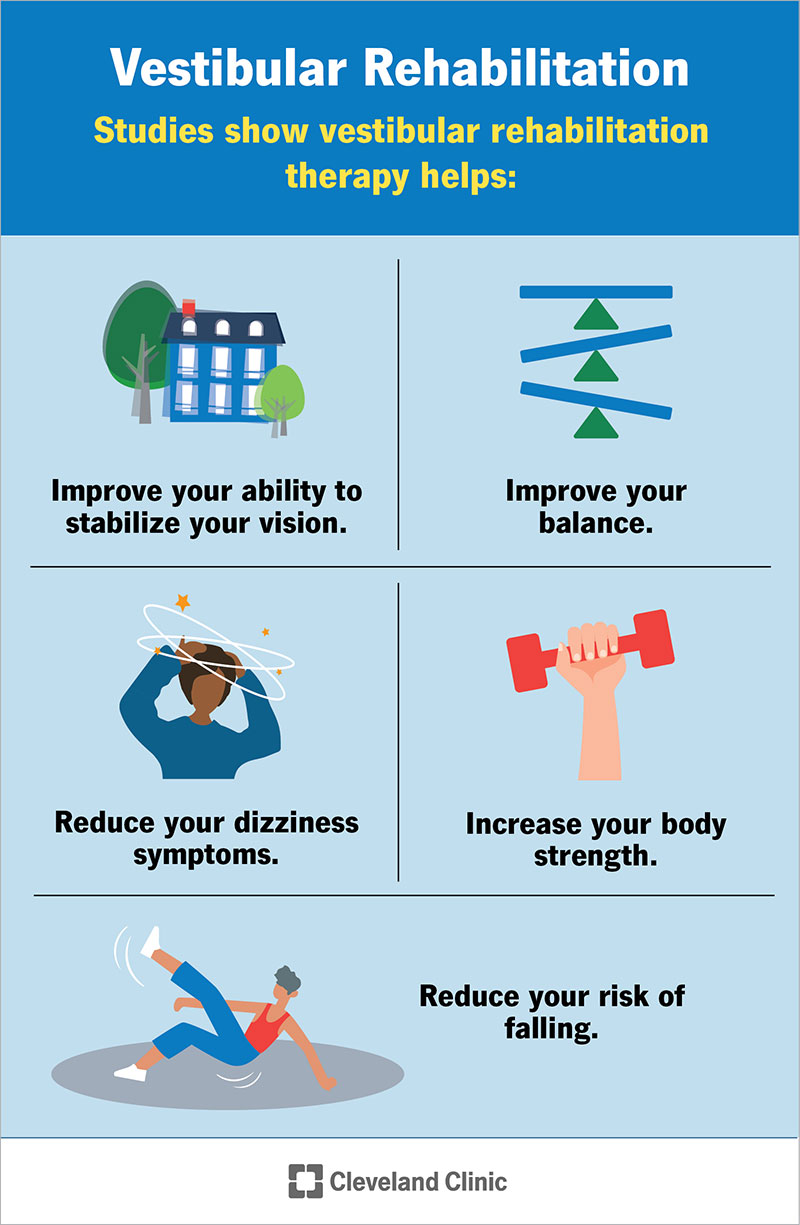
Vestibular Exercises Chart
Vestibular Exercises Chart - This fact sheet provides information on vestibular rehabilitation exercises for people with dizziness and balance problems. Web here’s a good rule of thumb for vestibular rehabilitation therapy: One of the best ways of helping your balance system is to do regular walks. Web vestibular compensation is a process that allows the brain to regain balance control and minimise dizziness symptoms when there is damage to, or an imbalance between, the right and left vestibular organs (balance organs) in the inner ear. Web here, i’ll cover 8 vestibular rehab exercises that may help improve balance and dizziness. Follow the link above for much more detail. Position, tilt head down 30o slowly/quickly move head right/left with eyes open/closed. Web the program may include exercises for: Web remember to move only your eyes. Web in our opinion, bppv should nearly always be treated with vestibular rehabilitation, using specific maneuvers for the type of dizziness that patients experience. 2) these are meant to be worked through slowly and progressively. Lie down on one side with your head turned slightly upward. You’re gonna get dizzy or off balance to improve dizziness and balance later. Holding a single target, keep eyes fixed on target. No more than 5/10 symptoms over baseline, and for no more than 5 minutes at a time. Vestibular rehabilitation exercises are an aid to recovery and you should do them alongside an increase in your daily activities. Stay down until the dizziness subsides, plus an additional 30 seconds. • vestibular exercises do not treat or regenerate a damaged organ. Web vestibular rehabilitation (20 exercises) caveats: • vestibular exercises improve brain’s compensation for injuries or abnormalities within the balance system, thereby, building up tolerance in brain to overcome symptoms of vertigo. • vestibular exercises do not treat or regenerate a damaged organ. I’ve included exercises you can do right at home, with minimal equipment, as well as modifications to get you started. Web vestibular compensation is a process that allows the brain to regain balance control and minimise dizziness symptoms when there is damage to, or an imbalance between, the right. Web in our opinion, bppv should nearly always be treated with vestibular rehabilitation, using specific maneuvers for the type of dizziness that patients experience. To train movement of the eyes, independent of the head. Coordinating eye and head movements. Keeping eyes fixed on a single stationary target, walk toward target place on wall ______ feet away at eye level, moving. Web during vestibular rehabilitation therapy (vrt), home exercises are a vital part of treatment. Web • vestibular exercises help reduce the symptoms of vertigo and aid to regain balance. How to dose vestibular exercises. A physical therapist (pt) or occupational therapist (ot) specialist will design an individualized treatment plan with appropriate exercises to be performed at a. • vestibular exercises. Stay down until the dizziness subsides, plus an additional 30 seconds. Web during vestibular rehabilitation therapy (vrt), home exercises are a vital part of treatment. Coordinating eye and head movements. • vestibular exercises improve brain’s compensation for injuries or abnormalities within the balance system, thereby, building up tolerance in brain to overcome symptoms of vertigo. Follow the link above for. Position, tilt head down 30o slowly/quickly move head right/left with eyes open/closed. Web during vestibular rehabilitation therapy (vrt), home exercises are a vital part of treatment. Web • vestibular exercises help reduce the symptoms of vertigo and aid to regain balance. Web this fact sheet provides information on vestibular rehabilitation exercises for people with dizziness and balance problems. Web remember. 2) these are meant to be worked through slowly and progressively. Walk and look at targets right/left. • speed of eye movement should be increased as long as the target stays in focus. Coordinating eye and head movements. I’ve included exercises you can do right at home, with minimal equipment, as well as modifications to get you started. Web the program may include exercises for: Stimulating the symptoms of dizziness in order to desensitize the vestibular system. The purpose of these exercises is to improve one’s central or brain’s compensation for injuries or abnormalities within the vestibular or balance system. • speed of eye movement should be increased as long as the target stays in focus. 1) habituation,. The purpose of these exercises is to improve one’s central or brain’s compensation for injuries or abnormalities within the vestibular or balance system. These exercises basically involve moving and balancing at the same time. Web in our opinion, bppv should nearly always be treated with vestibular rehabilitation, using specific maneuvers for the type of dizziness that patients experience. Holding a. 2) these are meant to be worked through slowly and progressively. Web in our opinion, bppv should nearly always be treated with vestibular rehabilitation, using specific maneuvers for the type of dizziness that patients experience. To practice head movements that cause dizziness. Web three key systems for balance: To train movement of the eyes, independent of the head. Q repeat using full field stimulus. • if you use glasses, wear them while performing exercises. Web three key systems for balance: This fact sheet provides information on vestibular rehabilitation exercises for people with dizziness and balance problems. Sit up and stay in this position until the vertigo. 1) make sure you have appropriate diagnosis by your health care provider (e.g., bppv, cervicogenic dizziness, pppd, wad, etc.) before beginning. Web so stick through it, it really does help. As you improve, try to focus on a smaller and smaller detail on each card, eg nose, eyes or mouth. The purpose of these exercises is to improve one’s central or brain’s compensation for injuries or abnormalities within the vestibular or balance system. Our fact sheets are designed as general introductions to each subject and are intended to be concise. Holding a single target, keep eyes fixed on target. Q repeat using full field stimulus. Feet away at eye level, moving seconds. • vestibular exercises improve brain’s compensation for injuries or abnormalities within the balance system, thereby, building up tolerance in brain to overcome symptoms of vertigo. Keeping eyes fixed on a single stationary target, walk toward target place on wall head up and down for head side to side for. To practice head movements that cause dizziness. Web this fact sheet provides information on vestibular rehabilitation exercises for people with dizziness and balance problems. Repeat while moving head side to. To practice balancing in everyday situations with special attention to developing the use of the eyes and the muscle sense awareness. These exercises basically involve moving and balancing at the same time. You’re gonna get your muscles burning to get stronger, you’re gonna get out of breath with a run to gain endurance.Vestibular Rehabilitation Exercises Chart

Vestibular Rehabilitation Therapy (VRT) Vestibular Disorders Association
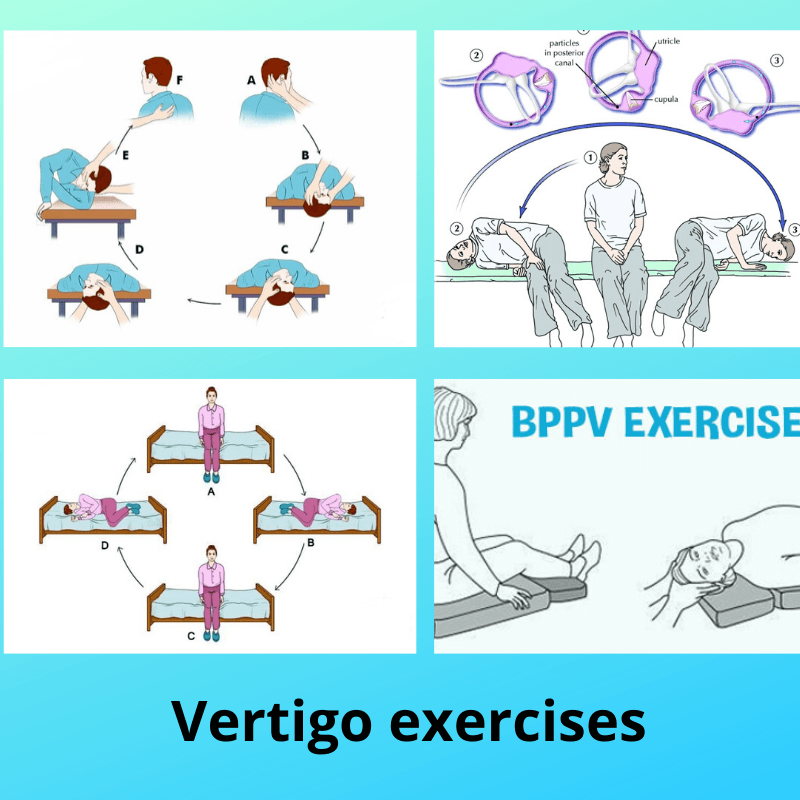
Printable Vertigo Exercise Chart

vestibular rehab exercises pdf Sofia Rohr

Vestibular Rehabilitation rehabilitation vestibular Rehabilitation

Vestibular Exercises at Home Autism Kids Vestibular Activities 2022
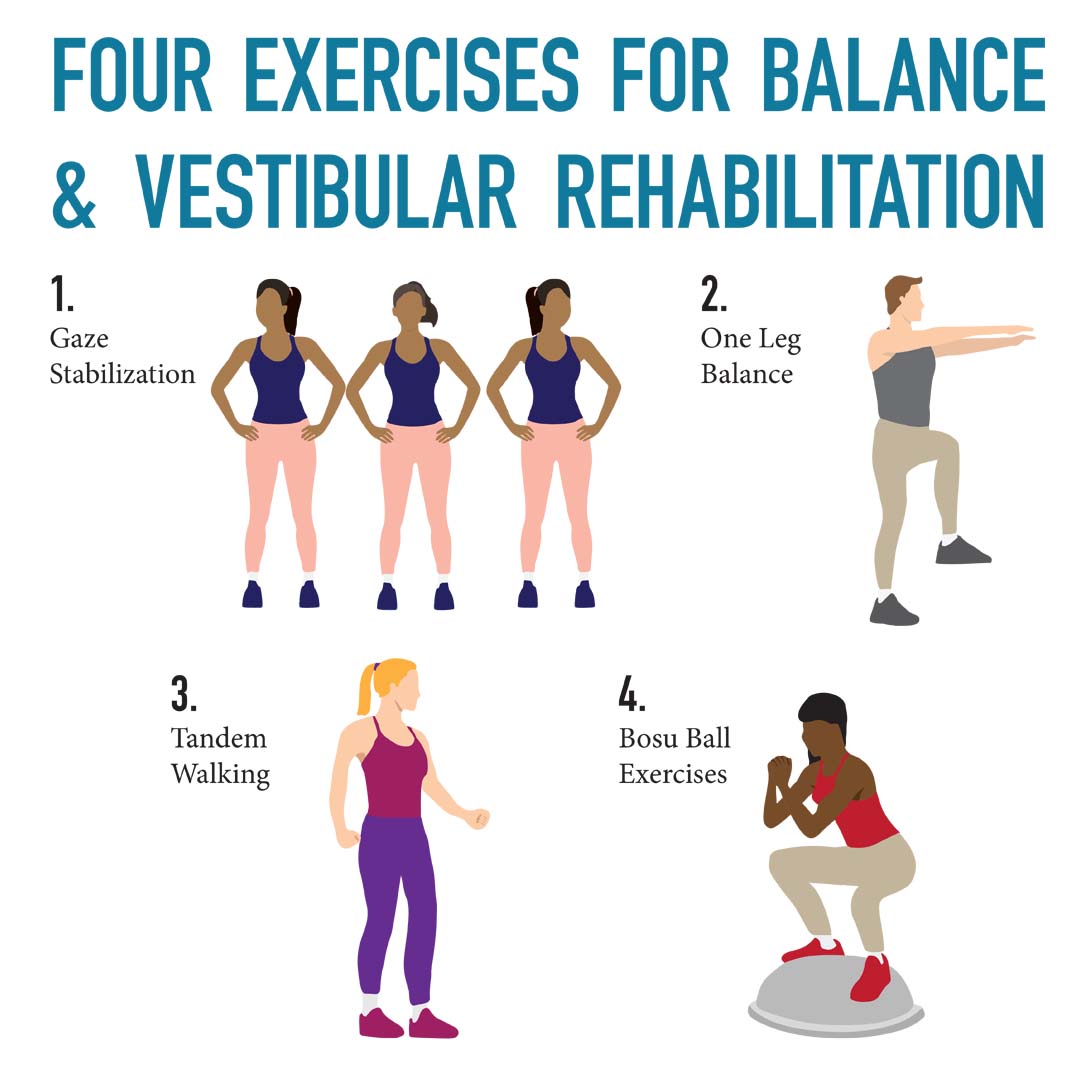
Four Exercises for Balance & Vestibular Rehabilitation Renew Physical
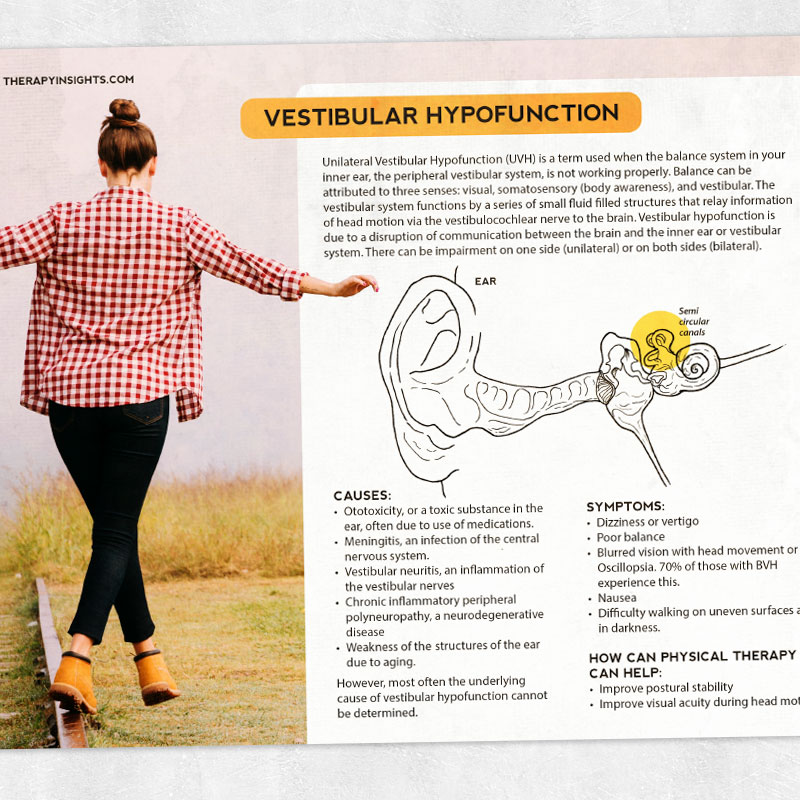
Vestibular Exercises Handout

Vestibular Rehabilitation Therapy Exercises
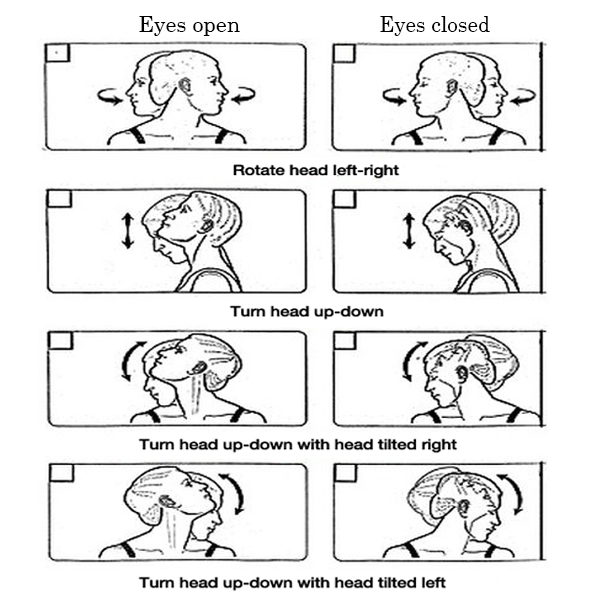
Vestibular Exercises Simplified… Dr Shreha Pathak ENT Specialist
Web Vestibular Rehabilitation Therapy Involves Exercises That Help You Manage Dizziness And Balance Issues (Imbalance).
One Of The Best Ways Of Helping Your Balance System Is To Do Regular Walks.
Lie Down On One Side With Your Head Turned Slightly Upward.
Web In Our Opinion, Bppv Should Nearly Always Be Treated With Vestibular Rehabilitation, Using Specific Maneuvers For The Type Of Dizziness That Patients Experience.
Related Post: